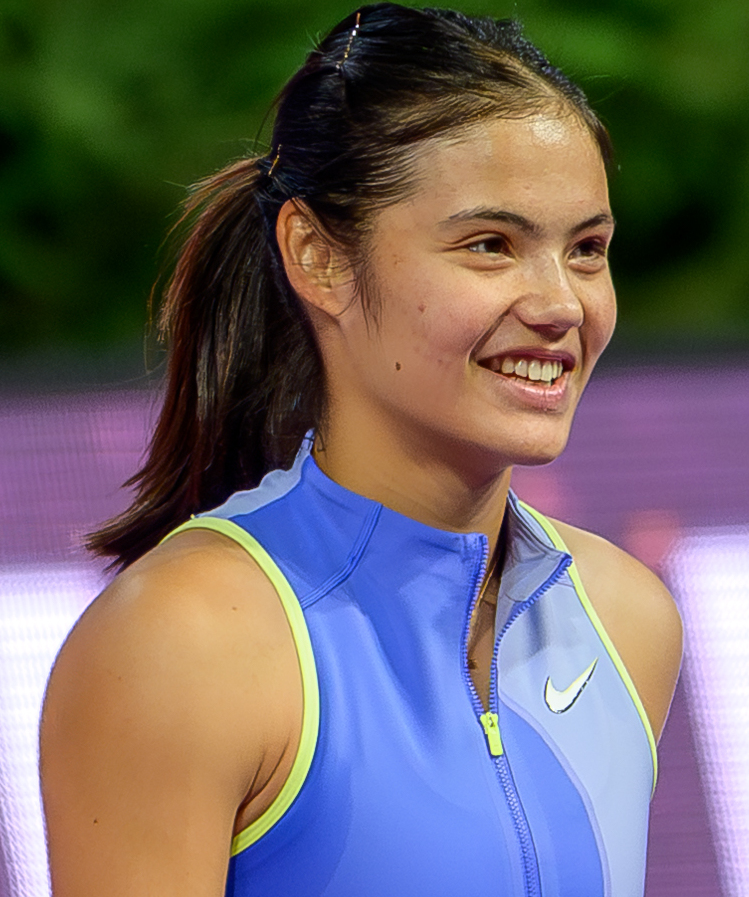
Emma Raducanu's Coach Search: Why She's Tapping Into Many
The spotlight on British tennis sensation Emma Raducanu has been relentless since her fairytale 2021 US Open victory. While her meteoric rise captivated the world, her subsequent struggles and, perhaps most notably, her frequent coaching changes have become a recurring topic of discussion. Now, Raducanu is embracing an unconventional coach strategy, opting to "tap into a few people" for advice rather than committing to a single full-time mentor. This multi-faceted approach signals a significant shift in her philosophy, aiming to rediscover her natural game while navigating the intense scrutiny that defines her career.
The Rationale Behind Raducanu's Evolving Coaching Strategy
Emma Raducanu's coaching search isn't a simple quest for a new voice; it's a deeply personal journey to reclaim her authentic playing style. Following her split with Francisco Roig after the Australian Open, her seventh full-time coach, Raducanu openly expressed a fundamental disagreement over playing style. This wasn't an isolated incident, but rather a culmination of experiences where she felt her instincts were being overridden.
"I have had a lot of people telling me what to do, how to play, and it hasn't necessarily fit," Raducanu told BBC Sport. This sentiment underpins her current strategy. Her US Open triumph was characterized by an aggressive, free-hitting style born of instinct and fearlessness. However, in the wake of that success, the influx of advice and tactical directives from various coaches seems to have, in her own words, "coached out of me a little bit" that natural flair.
Her desire is clear: "Right now, it's more about bringing my instincts back out, getting back in touch with myself." This isn't a rejection of coaching altogether, but a clear preference for guidance that complements her innate abilities rather than dictates a new path. For an athlete of her caliber, this self-awareness is crucial. It speaks to a player actively seeking harmony between external advice and internal conviction.
The Scrutiny Factor: A Public Burden
A significant barrier to a traditional full-time coaching appointment for Raducanu is the relentless public and media scrutiny. "Anyone I bring in is straight away going to be scrutinised - even if it's a trial," she noted. This pressure is immense. Every win, every loss, every public appearance with a new coach becomes a focal point for analysis, often overshadowing her own performance. This hyper-focus creates an environment where a trial period can feel like an immediate, high-stakes commitment.
Raducanu candidly admitted, "I might feel the pressure to stick with them, even if it's not necessarily the right decision." This highlights the unique challenges faced by a global superstar. The media cycle often demands quick answers and definitive decisions, leaving little room for the organic trial-and-error that is often part of an athlete's development. By opting for a more fluid, multi-person approach, Raducanu seeks to mitigate this external pressure, giving herself the freedom to experiment and learn without the added burden of public expectation or a premature long-term commitment.
A Flexible Roster: Who's Currently in the Mix?
In her current phase, Raducanu is assembling a supportive network, valuing specific inputs over a singular dominant voice. Two names have prominently emerged in this context: Mark Petchey and Alexis Canter.
- Mark Petchey: A familiar face in British tennis, Petchey is known for his analytical insight as a commentator for the Tennis Channel and his coaching experience, notably with Andy Murray early in his career. His presence at Indian Wells, where his day job takes him, has allowed for a convenient, ad hoc arrangement. Petchey joined Raducanu’s team last March in Miami, where she reached the quarter-finals, and was a regular presence during her clay-court season, including a run to the fourth round in Rome. Raducanu has expressed how well she works with him, feeling more comfortable and enjoying her time on court.
- Alexis Canter: Primarily serving as a hitting partner, Canter's coaching experience is more limited. He was with Raducanu when she made the semi-finals in Washington last summer and reached only the second final of her career in Cluj recently. While his role is more in the background, particularly when Petchey is also present, he provides consistent support and a familiar presence.
This flexible arrangement allows Raducanu to leverage Petchey's strategic insights and experience while maintaining the day-to-day support of Canter. It's a pragmatic solution that enables her to access high-level advice without the constraints of a traditional full-time contract. This approach reflects her open-mindedness, yet also her cautiousness about making a commitment that doesn't align perfectly with her rediscovered priorities.
The Benefits of a Hybrid Coaching Approach
While unconventional, Raducanu's hybrid coaching model offers several potential advantages:
- Diverse Perspectives: She can tap into various areas of expertise, drawing specific insights from different individuals without being beholden to one overarching philosophy.
- Reduced Pressure: By not having a single, permanent coach, she avoids the intense media scrutiny and the internal pressure to justify a potentially mismatched partnership.
- Flexibility and Adaptation: The ad hoc nature allows her to adapt her support team based on her schedule, location, or specific needs at different tournaments or training blocks.
- Fostering Self-Reliance: This setup encourages Raducanu to take greater ownership of her game, evaluating advice critically and integrating what truly resonates with her vision.
- Lower Stakes: Trials can happen naturally without the expectation of an immediate, long-term commitment, enabling more genuine assessment.
Rediscovering Instincts: The Core of Her Mission
At the heart of Raducanu's raducanu coach search and her new strategy is the profound aim to rediscover her instincts. Her US Open triumph was the epitome of playing without inhibition, relying on natural aggression and an unburdened mindset. Post-Slam, the weight of expectation and the numerous voices offering advice seem to have, paradoxically, clouded that clarity. Many elite athletes, at various points in their careers, find themselves at a crossroads where external input starts to conflict with their inherent feel for the game.
Her current "reboot" is not just about technique, but deeply about regaining that mental freedom and enjoyment. "At the start of the year, I wasn’t feeling too good about my game, and I was playing in a way I didn’t necessarily enjoy," she shared. This indicates a disconnect between her natural playing style and the tactical directions she was receiving. To regain that enjoyment is paramount, as joy in the sport often translates directly into better performance and resilience. By minimizing rigid external control, she hopes to cultivate an environment where her natural game can flourish again, free from the constant second-guessing that can cripple a player's confidence.
For more on her journey to reclaim her game, you can read about Emma Raducanu's Reboot: Searching For Her Natural Style.
Lessons for Aspiring Athletes (and their Coaches)
Raducanu's journey offers valuable insights for anyone involved in high-performance sport:
- Athlete Autonomy: The athlete's voice should be central. Coaching should empower, not dictate.
- Complementary vs. Dictatorial Coaching: The most effective coaches find ways to enhance a player's natural strengths rather than trying to completely overhaul their game.
- Prioritizing Enjoyment: Long-term success often stems from a genuine love and enjoyment of the sport. Coaches should strive to maintain this passion.
- Breaking Tradition: There's no single "right" way to build a support team. Innovative solutions may be necessary for unique athletes.
- Self-Awareness: Understanding one's own playing style and mental approach is the first step toward effective coaching relationships.
Beyond the Court: A Total Reboot
Raducanu's search for coaching stability is part of a broader "total reboot" that extends beyond just her on-court team. It encompasses a holistic approach to her career, including new partnerships like her recent sponsorship with Uniqlo. This wider reset indicates a player who is carefully re-evaluating every aspect of her professional life to align it with her long-term vision. This isn't just a short-term fix to recent performance dips; it's a strategic move designed to lay a more stable and sustainable foundation for her career.
The past year has seen her battle various injuries and inconsistent form, making this period of introspection and strategic recalibration even more critical. Her current coaching philosophy is a testament to her maturity and growing understanding of what she needs to succeed on her own terms. It's about finding equilibrium in a sport that demands constant adaptation, and doing so in a way that allows her innate talent to shine through, free from undue external pressures.
Emma Raducanu's unconventional raducanu coach search reflects a thoughtful and self-aware approach to her career. By "tapping into a few people," she's not rejecting the value of coaching but refining her strategy to prioritize her instincts, mitigate external pressure, and reclaim the natural, aggressive style that propelled her to Grand Slam glory. The tennis world will be watching keenly to see if this unique path, prioritizing personal alignment over traditional structures, can lead her back to consistent success and sustained enjoyment on court.